From the piping piccolo to the towering contrabass — the range of instruments that gives a flute choir its rich, orchestral sound.
Say “flute” and most people picture a single silver instrument held out to the side. But the flute is really a whole family — a range of instruments from the tiny and piercing to the tall and thunderous. A flute choir like ours uses the full spread, which is exactly what lets an all-flute ensemble sound as rich and complete as a choir of voices.
Here's the family, from highest to lowest.
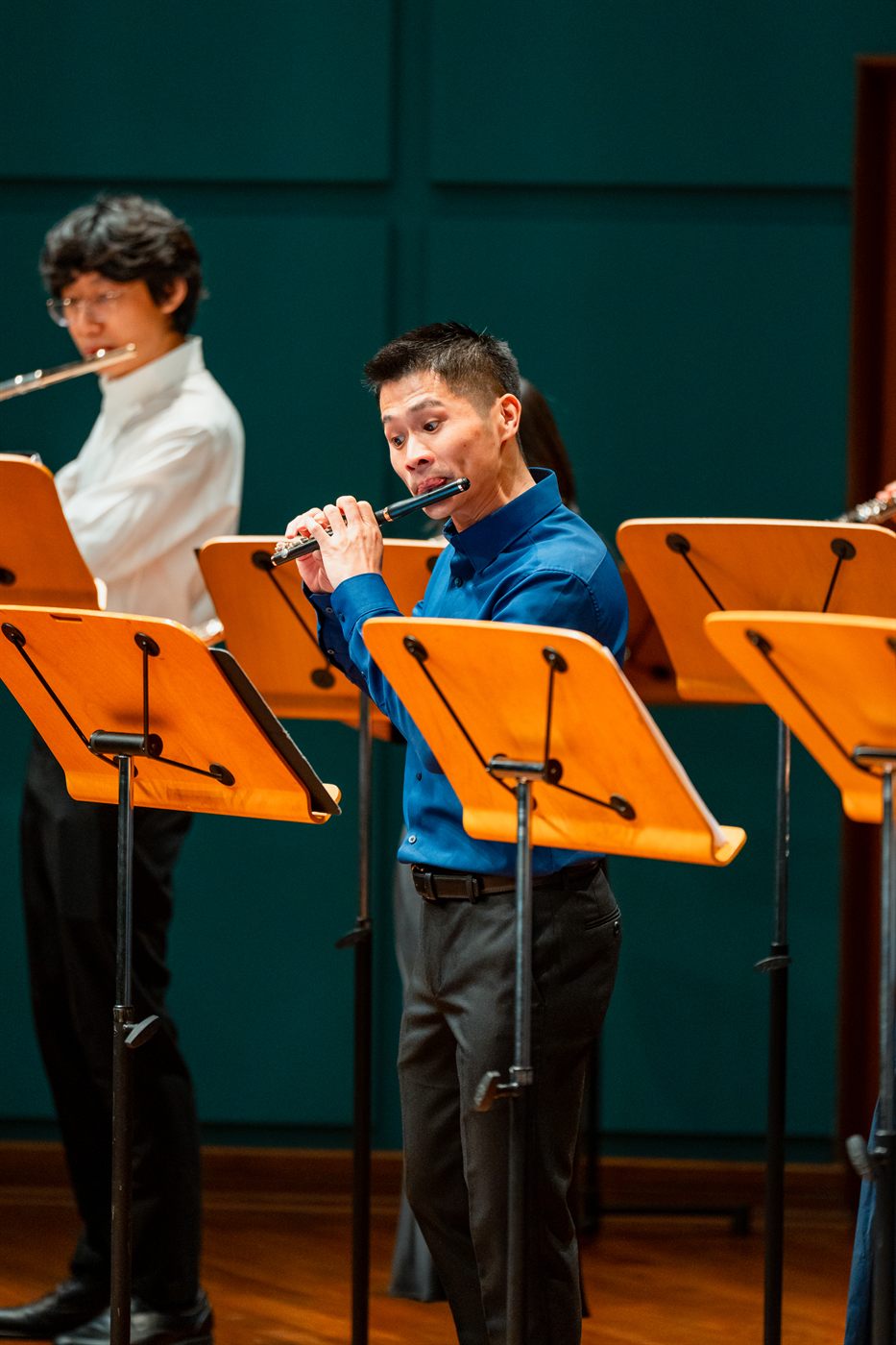
Piccolo — the smallest and highest member.
Piccolo (the highest voice)
Half the length of a concert flute and pitched a whole octave higher, the piccolo is small, bright, and brilliant — it can cut clean through an entire orchestra. In the flute choir it's the sparkle at the very top, the voice that catches the light.
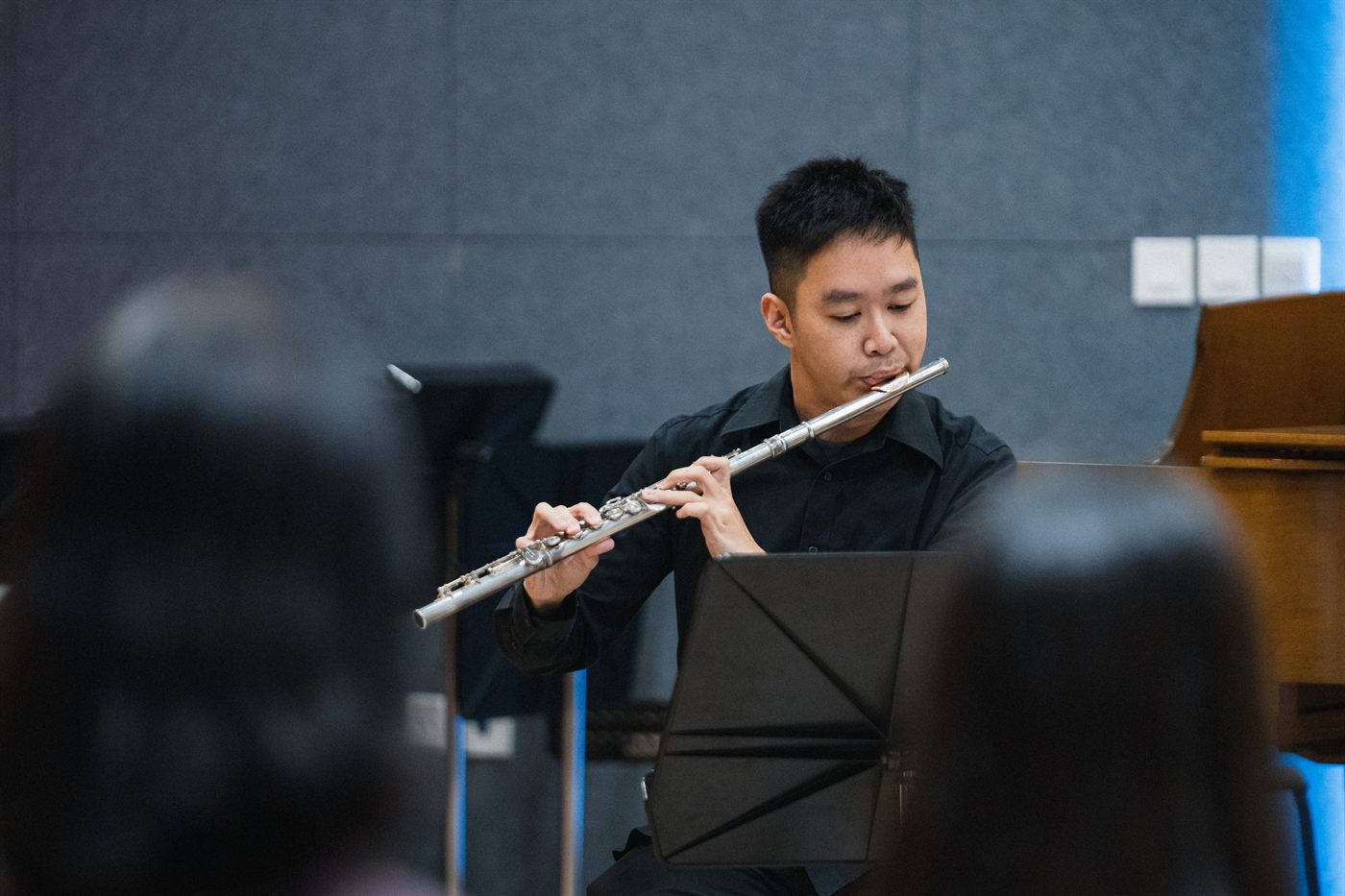
The concert flute — the one most people picture.
Concert flute (the one you know)
The familiar silver flute, and the instrument nearly every flutist begins on. It's the “soprano” of the family and the centre of gravity for everything else — when people picture a flute, this is it.
The alto flute — pitched in G, a fourth lower.
Alto flute (warm and velvety)
Longer and noticeably mellower than the concert flute, the alto has a warm, breathy, slightly haunting tone you'll recognise from film scores. It fills the middle of the choir with colour.
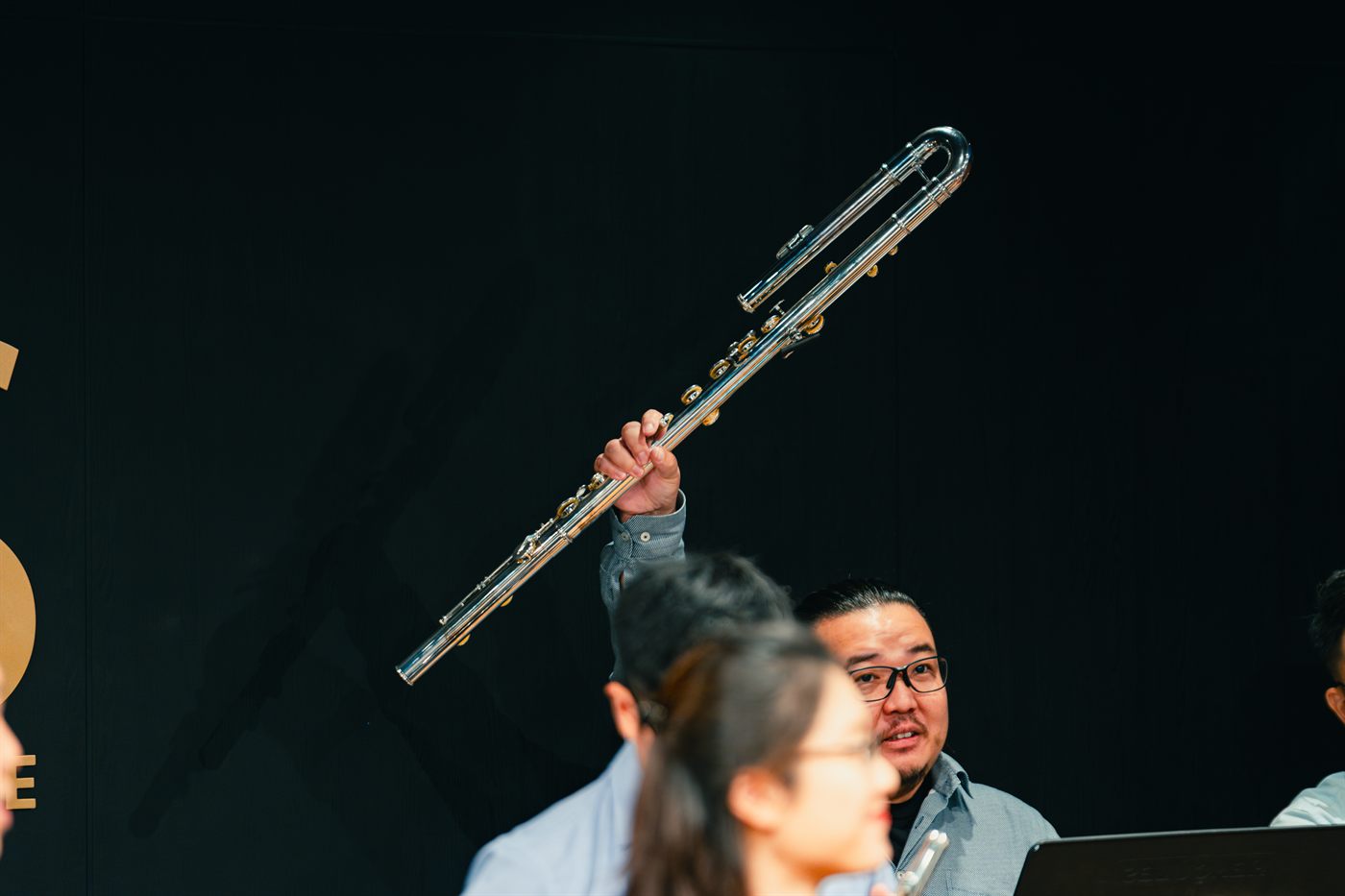
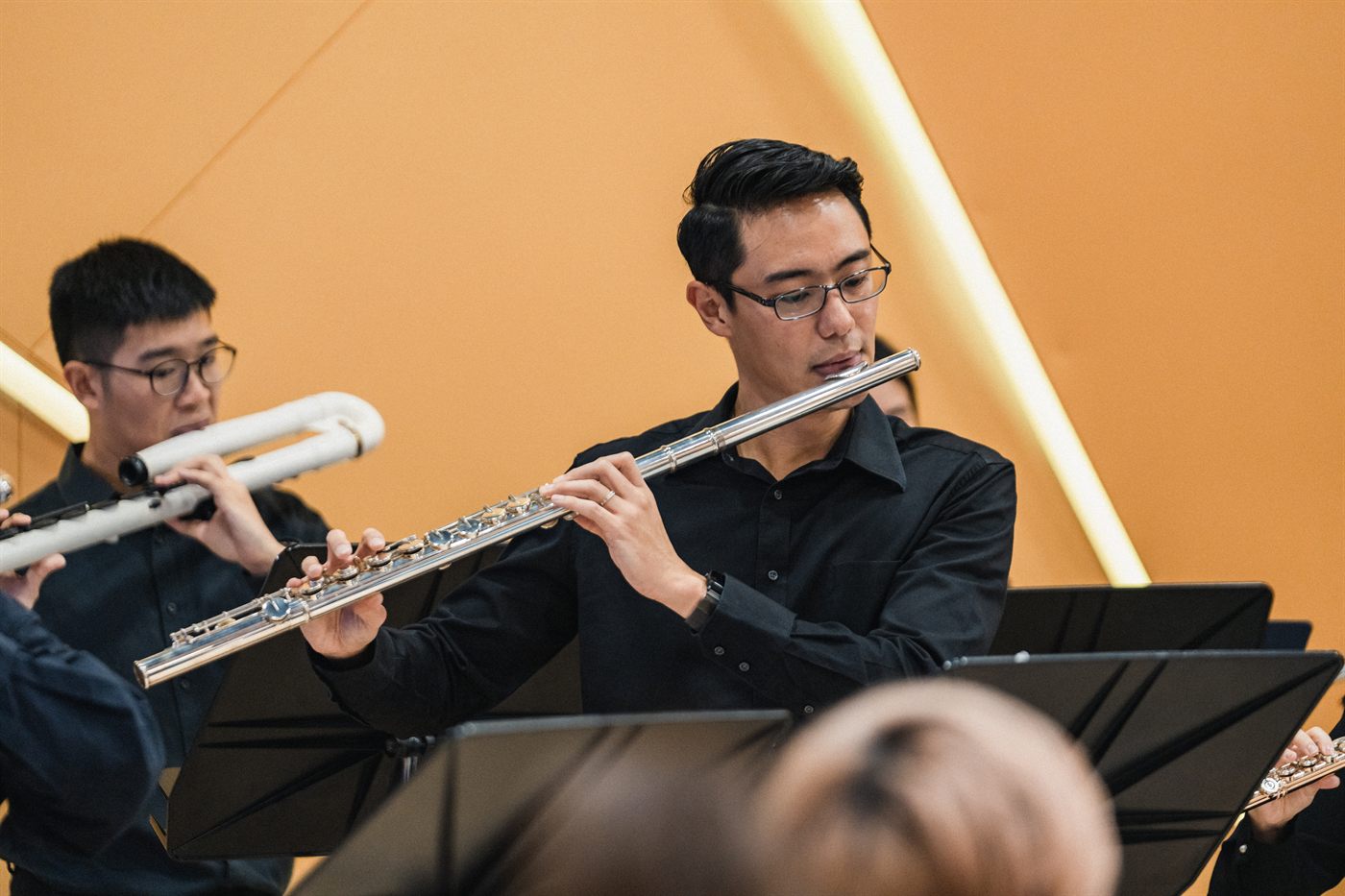
The bass flute — note the J-shaped headjoint.
Bass flute (smoky and mellow)
An octave below the concert flute, the bass has a tube so long that the head is bent into a J-shape so the player can reach the mouthpiece. The sound is low, smoky and mysterious — the tenor and baritone of the family.
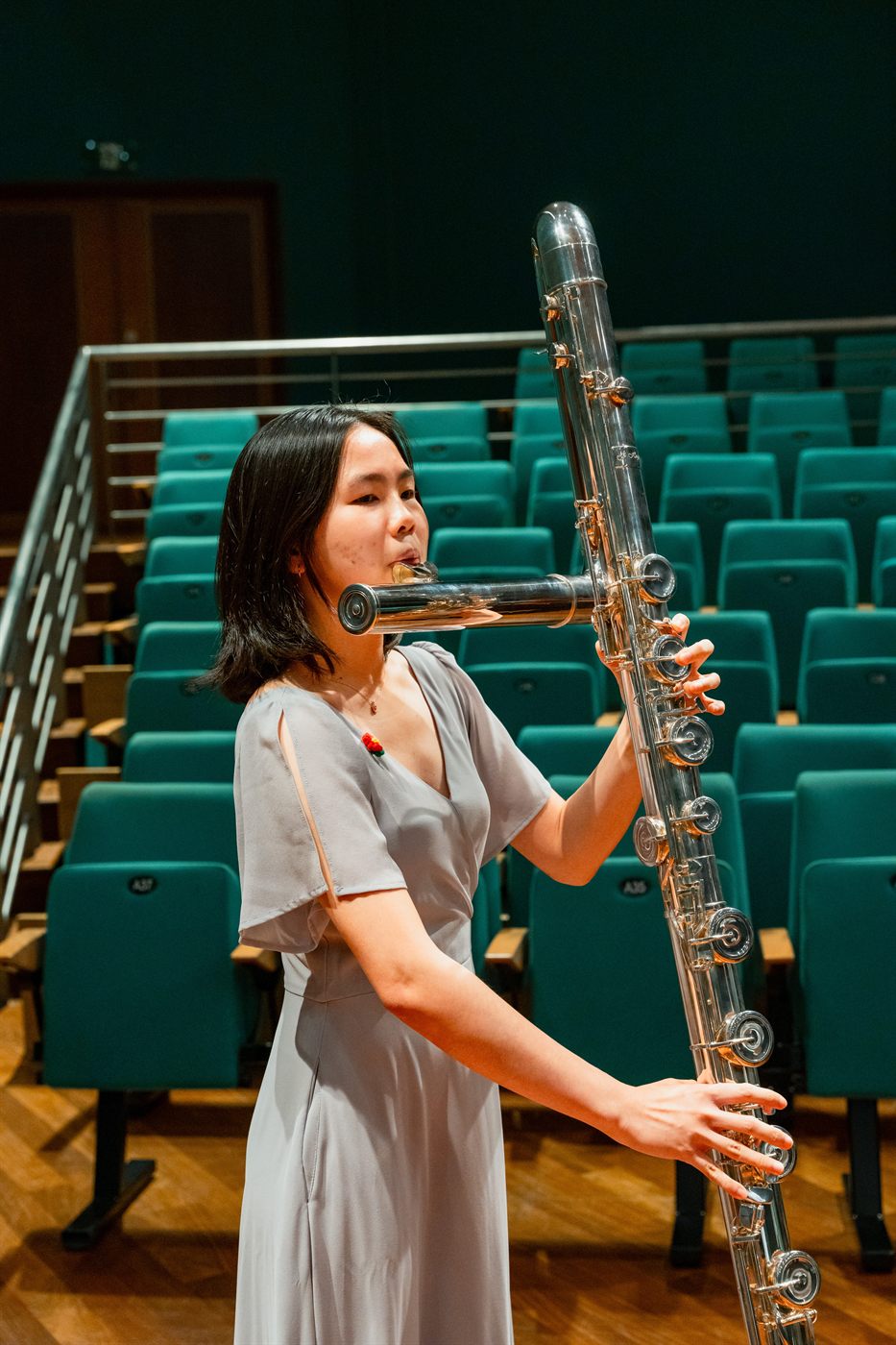
The contrabass flute — it towers over the player.
Contrabass flute (the foundation)
Two octaves below the concert flute, with metres of tubing folded into a towering instrument the player stands behind. Its notes are deep and resonant — felt almost as much as heard. This is the bass line that anchors the whole ensemble.
And for the truly curious: the family keeps going down — subcontrabass and double-contrabass flutes exist too, though you'll rarely meet one.
A note on variations
Even within a single type, flutes vary — in material and in shape. A few you'll spot in our choir:
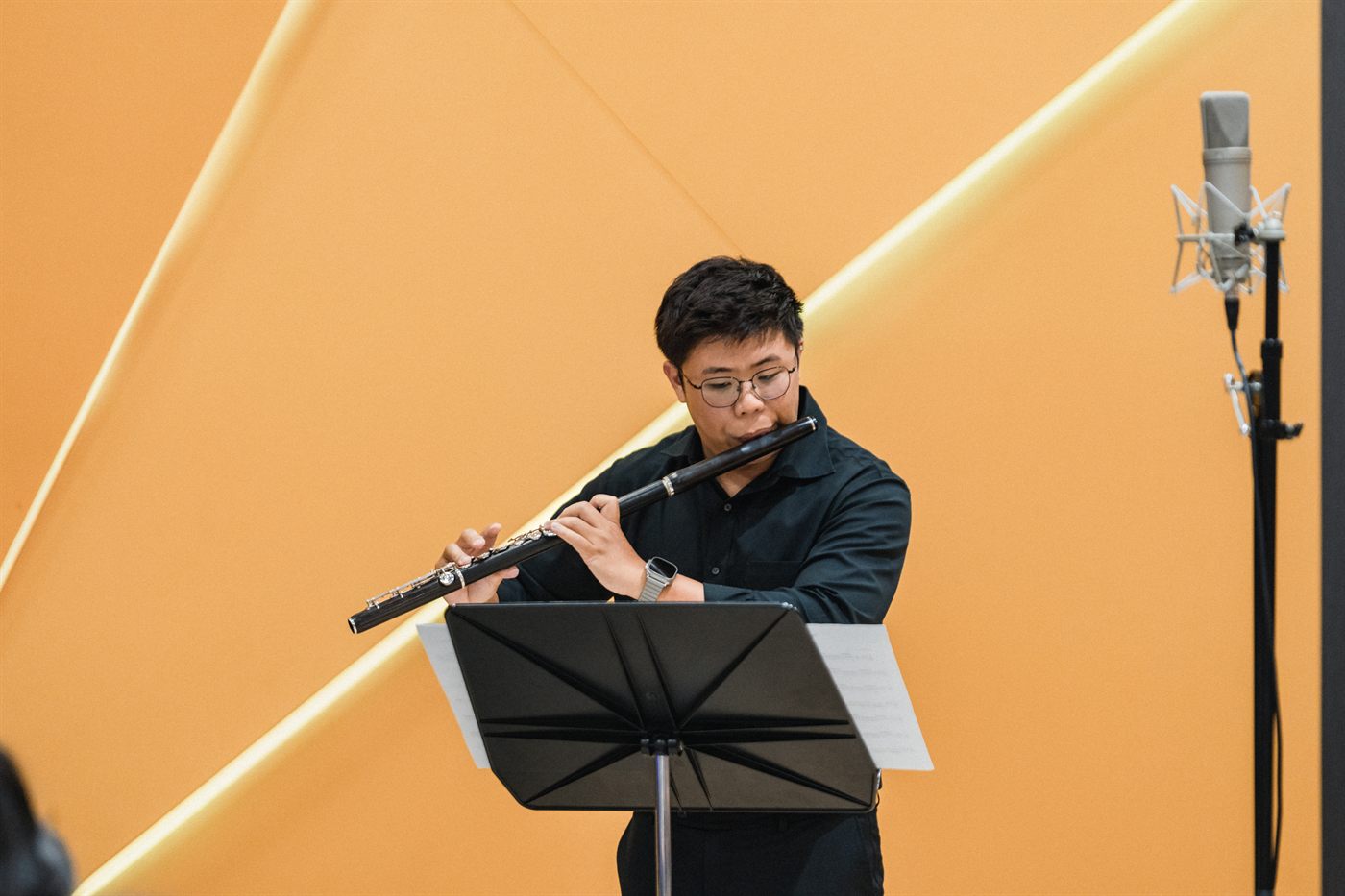
A wooden concert flute — warmer and darker in tone.
Silver, or wood
Most modern flutes are silver, but the flute's older voice was wooden — and some players still choose a wooden body for its warmer, darker, more covered tone. It's the same instrument, fingered identically; only the colour of the sound changes.
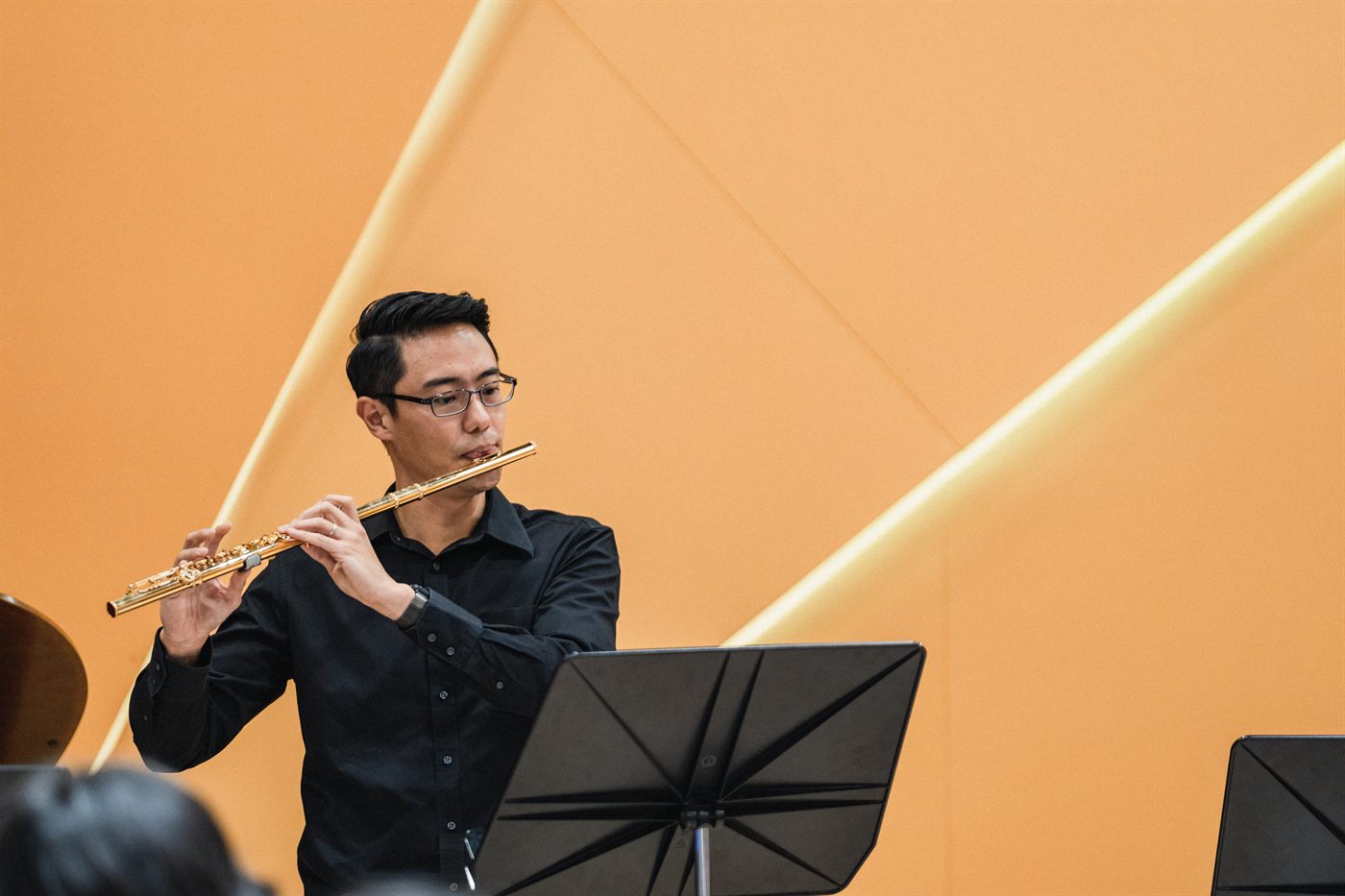
A gold flute — denser metal, a warmer and more powerful voice.
And sometimes, gold
Look closely and you might catch a flute that gleams gold rather than silver. Gold is denser than silver, and the players who choose it do so for the sound — warmer, rounder and more powerful, with a depth that carries beautifully in a solo line. It's often a flutist's prized instrument: the one they reach for when the music asks for its richest voice.
An alto flute with a straight headjoint.
Curved, or straight
The larger flutes are long, so altos and basses often have a curved headjoint that brings the mouthpiece back within comfortable reach. A straight headjoint, shown here, gives a more direct line and a slightly more focused sound — many players simply prefer how it balances.
A choir, in one instrument
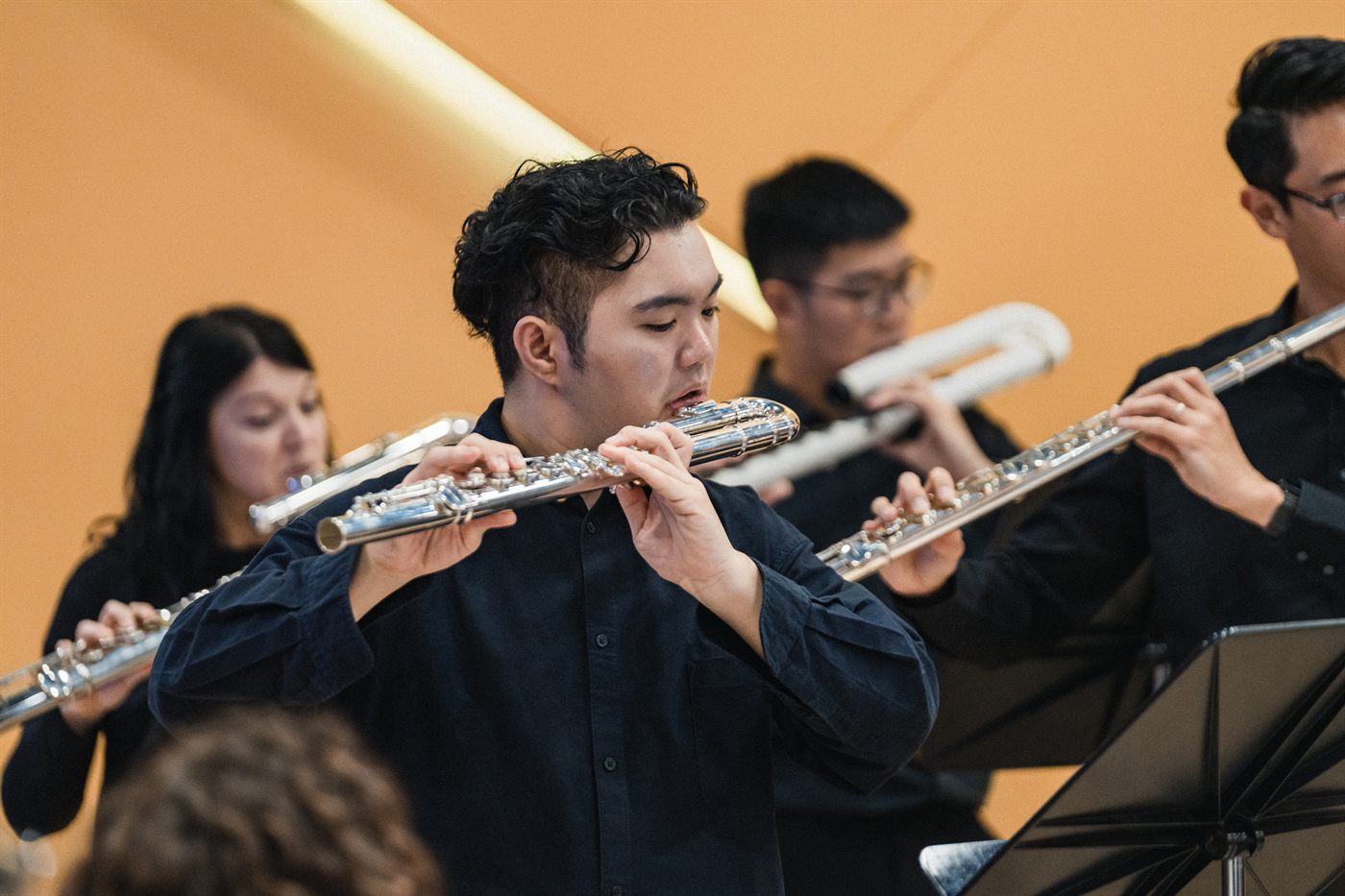
Put them together and the flute family stacks up just like voices in a choir — piccolo and flutes as the sopranos, alto in the middle, bass and contrabass holding the bottom. That's the secret behind a flute choir: with the full family in the room, a single instrument's worth of timbre becomes an entire orchestra of flute.
Hear them together
There's no substitute for hearing the whole family in one room. Here's King's Flute Choir performing live at the Esplanade Recital Studio.
King's Flute Choir · 1 September 2024 · Esplanade Recital Studio